Have a store reset coming up and wondering how a retail removal service actually works? In simple terms, a retail removal service is an end-to-end cleanout and haul-away for retail spaces—from sales floors to backrooms—with compliant disposal and recycling. The goal is to return your space to a clean, open shell so your remodel, reset, or turnover can proceed with less stress and downtime.
Key Takeaways
- A retail removal service covers planning, removal, hauling, and compliant disposal of store contents.
- Clear rules, documentation, and building access coordination keep schedules on track.
- Fixtures, backrooms, and specialty items each follow distinct workflows for safety and speed.
- Regulated items (e-waste, lamps, refrigerants) require proper handling and receipts.
- Choosing an experienced, well-documented provider reduces risk and rework.
Table of Contents
- Retail removal service explained: what’s covered and who benefits
- Pre-project planning and site assessment
- Fixture, display, and shelving removal
- Backroom, stockroom, and packaging cleanouts
- Specialty items and regulated materials
- Scheduling, coordination, and on-site safety
- Pricing, timelines, and how to choose a provider
Retail removal service explained: what’s covered and who benefits
A store clear-out has many moving parts—shelving, displays, and backroom debris—and a retail removal service handles all of it. The crew plans, lifts, hauls, and disposes of items the right way, while sorting for reuse or recycling when possible. The end state is a broom-clean shell so your next team can move in immediately.
Core inclusions from start to finish
The process begins with a walkthrough to map items and note access rules. Crews remove fixtures such as gondolas and racks, disconnect loose displays, and stack parts for transport. Backrooms are cleared of pallets, cardboard, and outdated stock. Items are loaded, hauled, and processed for donation, recycling, or legal disposal. Floors are swept so your next crew can step in without delay.
Store types and scenarios that see the most value
Who uses this service most? Retail chains, pop-ups, and small shops during resets or closures. Malls and shopping centers during tenant turns. Boutiques that refresh layouts before peak seasons. Landlords who need units clean for the next lease. Office showrooms and builder design centers also call for help when displays change. Beaverton Oregon Junk Removal works across Beaverton every week to support moves, remodels, and decommissions. When a project has bulk items or tight timelines, a retail removal service clears the way so schedules stay on track.
Pre-project planning and site assessment
Planning saves time on site. It reduces risk and helps you hit your handoff date. A good team asks questions early and confirms the scope in writing. That keeps work moving, even when docks are busy or a mall has strict rules.
Walkthrough, inventory mapping, and scope definition
A walkthrough sets the baseline. The crew lists what stays and what goes, tagging fixtures and counting displays. They note heavy items like counters and safes, as well as fragile zones like glass storefronts and delicate tile. An inventory map guides labor and hauling plans. It also helps when you link other help, like Office Cleanout in Beaverton, OR for back-office items.
Access rules, building compliance, and documentation
Many sites require badges, dock bookings, or elevator time slots. Some ask for a work plan and floor protection. Your provider should gather these needs in advance. If the building asks for a Certificate of Insurance (COI), the crew must provide it before arrival. For data-bearing items, align removal with your company policy for media sanitization; the federal NIST guidance for secure erasure is a common standard (NIST SP 800‑88). Clear rules in writing prevent delays on day one.
Fixture, display, and shelving removal
Fixtures can be simple or complex. Some bolt to floors. Others clip together. Safe takedown is key to avoid damage and injury. The team should use the right tools and pack parts carefully for transport.
Safe disassembly of gondolas, racks, counters, and mannequins
Crews start by clearing shelves and bagging loose parts. They cap cut edges and remove pegs. For floor-bolted units, they unfasten and patch small holes if in scope. Counters and cash wraps may need a two-person lift or dollies. Mannequins get wrapped to protect finishes. The aim is a clean, careful process that keeps your site neat.
Protection, packing, and hauling workflows
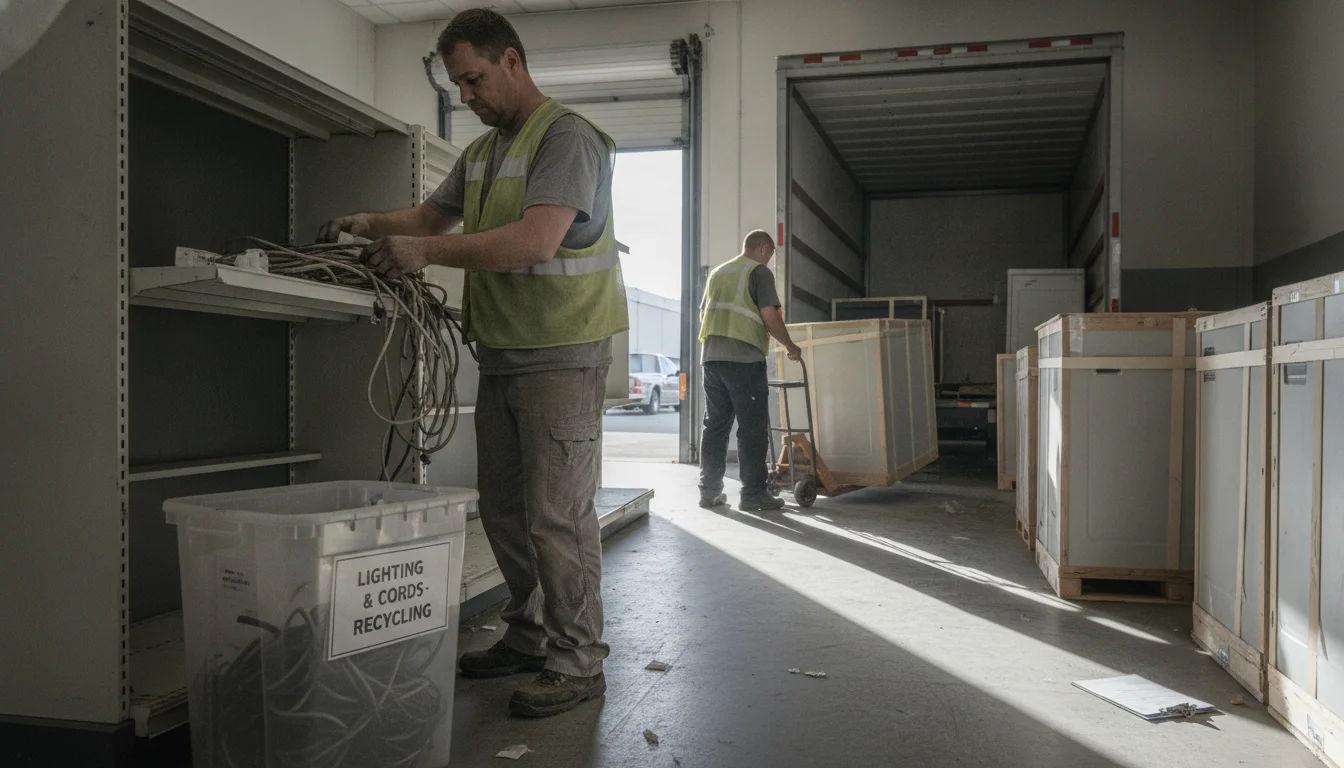
Protection matters in active malls. Crews lay runners and corner guards, then wrap units with stretch film or pads. Small parts go in labeled totes. Carts and pallet jacks move stacks to the dock. Trucks are loaded by weight and route. When displays include lighting or cords, they are kept separate for safe recycling. If your project includes appliances, coordinate with Appliance Removal in Beaverton, OR to handle heavy-lift pieces properly.
Backroom, stockroom, and packaging cleanouts
Backrooms fill fast—pallets, freight debris, old samples, and damaged goods. A cleanout makes space for new stock and improves safety. It also helps prevent pests and odors.
Skids, pallets, and cardboard management
A crew sorts wood skids and corrugate for recycling. Baled cardboard may have site rules, and some centers request that boxes be broken flat. If you have compactors, the team can feed them during set hours. Stretch wrap and foam are bagged and staged. Clear labeling keeps this line moving. When volume is high, Commercial Junk Removal in Beaverton, OR can add trucks to keep the schedule.
Disposition options for overstock and damaged goods
Overstock can go to return centers. Some items are donated if policy allows. Damaged goods are often tossed, but many can be recycled. Metals, paper, and clean plastics typically have outlets. For soft goods like mattresses from display beds, follow local rules before disposal. For break room couches or bulky sets, teams can remove them with care. If you have a showroom hot tub or demo spa, it may need a special lift path and a drain plan. For Yard Waste Removal related to tree limbs, yard props, or seasonal décor from outdoor displays, crews bundle and haul them. If you ever search “junk removal near me,” a full-service local team can gather odd items in a single trip.
Specialty items and regulated materials
Some store contents are not plain junk. They have rules. You need a plan for safe handling and the right end site. Good crews know the law and carry the forms.
Electronics, data-bearing devices, and e-waste compliance
Point-of-sale gear, tablets, and drives can hold data. They must be wiped or destroyed per your policy. Many brands follow the NIST media sanitization framework noted above. E-waste like monitors, printers, and cables often need special drop-offs. Many states follow federal Universal Waste rules for certain components, such as some batteries and lamps (EPA Universal Waste). A solid provider tracks chain of custody and gives you a receipt.
Refrigeration, lighting, and hazardous components
Coolers, mini-fridges, and HVAC parts may contain refrigerant. Recovery and disposal must follow applicable EPA rules (see EPA Section 608). Fluorescent tubes and some LEDs can fall under Universal Waste rules. Very old ballasts may include regulated oils. The team should pack these items in approved boxes and label them. For chemicals like cleaners or paint found in backrooms, the crew should follow site rules and Department of Transportation (DOT) guidance for transport if applicable (DOT Hazardous Materials). When in doubt, ask for their written handling plan.
Scheduling, coordination, and on-site safety
Time is critical in retail. Work often runs at night or in phases. Crews must align with mall rules, tenant schedules, and other trades. Safety protects people and property.
After-hours, phased work, and mall/center coordination
Many malls allow work only after close. Your plan should match dock hours, quiet-time rules, and cleaning windows. Large jobs may run in phases by zone to keep paths open and limit noise. Experienced providers call the center office before each shift to confirm access, loading rules, and waste room steps. If your project overlaps with an Office Cleanout in Beaverton, OR, coordinate so both teams move in a single flow.
Insurance, COIs, permits, and safety protocols
Ask for proof of general liability and workers’ comp. Many landlords require a COI with them listed. Some towns require simple permits for dock use or short-term parking. Safety plans should cover PPE, lifting, ladder use, and material handling. Federal OSHA rules set the baseline for safe work in the U.S. (OSHA Employer Responsibilities). Floor protection, spotters at docks, and clear aisles make a notable difference. A quick daily huddle helps the crew work smart and safe.
Pricing, timelines, and how to choose a provider
Retail clear-outs differ by size and scope. A kiosk tear-out is not the same as a two-floor flagship. While costs vary, the right plan sets the pace and keeps hours tight. Picking a skilled team reduces risk and limits rework.
What drives estimates and schedule duration
The main drivers are volume, weight, access, and rules. Heavy counters and long hauls add labor. Tight elevators slow moves. Night work can add shift steps. Regulated items require sorting and paperwork. Dock distance changes load times. Clear scope, good staging, and fast decisions speed things up. When projects span stores across Oregon or the wider Beaverton area, plan routes and crews early. Linking Junk Removal Services in Beaverton, OR helps when you need added capacity.
Vetting contractors and a store prep checklist
Look for a track record with malls and retail brands. Ask for COIs, references, and sample reports. Review their plan for e-waste and refrigerants. Confirm they label, sort, and sweep at the end. Make sure they can add trucks if you need it.
Here is a simple store prep checklist you can adapt:
- Mark what stays vs. goes with clear tags.
- Lock up stock and point out fragile zones.
- Book docks and elevators in advance.
- Share building rules and required badges.
- Stage cardboard and pallets for recycling.
Key takeaways
- A retail removal service covers planning, removal, hauling, and legal disposal.
- Clear scope, access planning, and safety rules prevent delays.
- Fixtures, backrooms, and special items each need their own workflow.
- E-waste, lamps, and refrigerants follow set rules; get receipts.
- Choose a team with retail experience, COIs, and flexible scheduling.
Frequently Asked Questions
What happens to old gondolas and racks after removal?
Most metal fixtures go to recycling. Wood and mixed parts are sorted. Reusable units may go to other stores or donation centers if allowed. Your provider should separate materials and haul them to the right sites, then give you a summary of where items ended up.
Can a crew remove break room furniture and bulky items?
Yes. Teams handle couches, tables, and old mattresses from display beds. They protect doors and floors, then load items by weight. If the site needs quick turnaround, they can stage bulky items first. Ask for help with Commercial Junk Removal in Beaverton, OR when volume is high.
How do you handle electronics with customer data?
Data-bearing devices should be erased or destroyed per your policy. Many follow the NIST SP 800‑88 framework. The crew will pack and log each device, then take it to a vetted recycler. Always request a disposal or destruction record for your files.
Do you work nights or after store hours?
Most retail work happens after close. Crews schedule around mall rules, dock hours, and cleaning windows. They can also phase work over several nights to reduce noise and keep paths clear. Share your timeline early so they can set the right crew size.
What if our store is in a multi-tenant center with strict rules?
That is common. The team will secure COIs, follow elevator booking, and use floor protection. They will keep aisles clear and load during approved windows. Clear points of contact and daily check-ins help things run smoothly.
Conclusion
Beaverton Oregon Junk Removal helps stores clear spaces fast and follow the rules. The team plans routes, handles fixtures, sorts backroom junk, and manages e-waste properly so your project can continue without unnecessary delays. Contact us.
If you are not sure which of these you are dealing with, it is worth having someone look at it before it turns into a bigger job. Get in touch with Beaverton Oregon Junk Removal today and we will tell you where you stand.