Your home is full, the clock is ticking, and you want a clear plan. If you’ve been searching for junk removal near me in Beaverton and still feel unsure, this house cleanout FAQs guide lays out what happens from start to finish so you can move forward with confidence. A house cleanout is the full removal of unwanted items from a home, garage, attic, or yard by a trained crew that sorts, loads, and transports them for donation, recycling, or disposal—so you don’t have to.
Key Takeaways
- A house cleanout means trained pros remove and route unwanted items for donation, recycling, or disposal while you direct what stays.
- Costs vary by volume, access, labor, and disposal needs; sharing photos and grouping items helps tighten quotes and timelines.
- Expect a walkthrough, careful loading, and a final sweep; most apartments take hours while larger homes can take most of a day.
- Hazardous items (e.g., wet paint, solvents, fuels) require special handling under Oregon rules; crews will guide safe alternatives.
- Beaverton Oregon Junk Removal works across Beaverton with professional house cleanouts and related services like Estate Cleanout and Commercial Junk Removal.
What Is a House Cleanout?
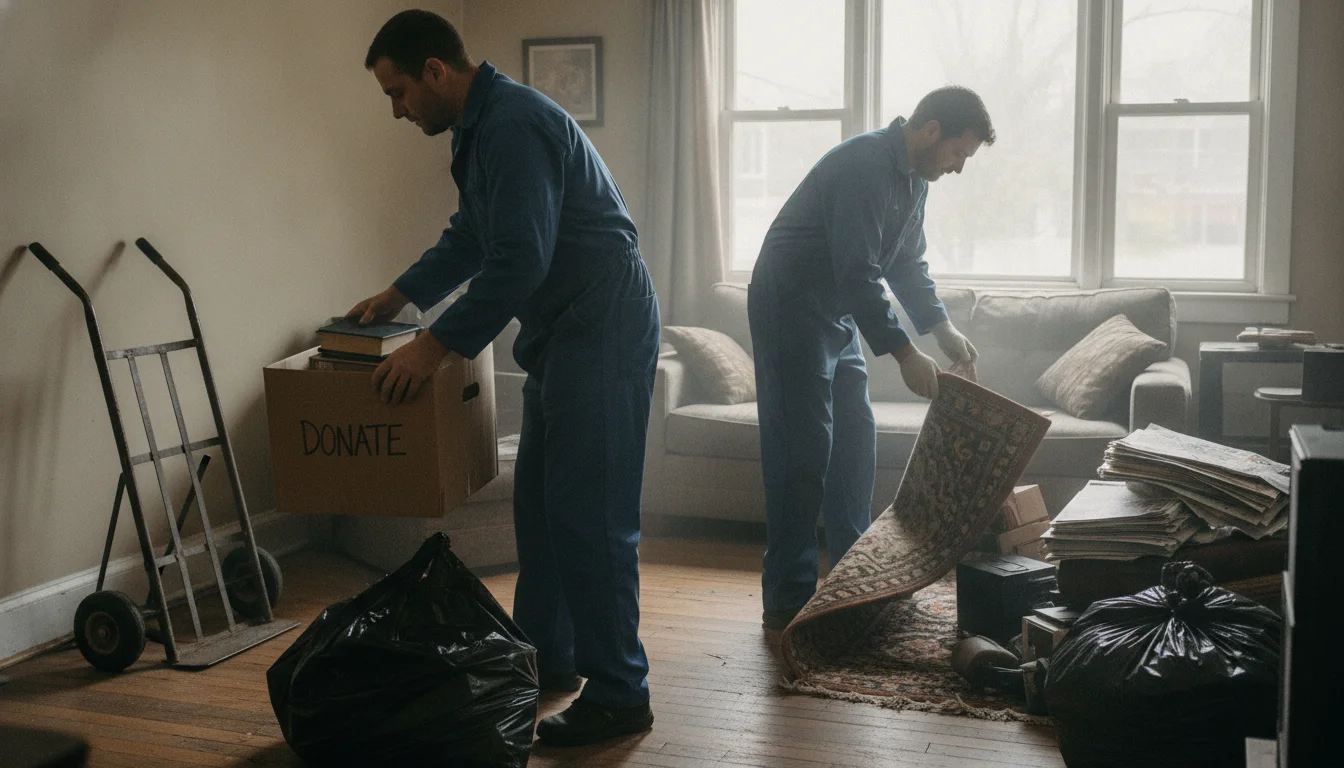
A house cleanout is a structured service where a crew clears unwanted items from living spaces, garages, attics, basements, and yards, then directs them to donation, recycling, or disposal. The team protects floors and doorways as needed, separates items to minimize landfill use, and confirms with you what stays and what goes at each step.
Costs and Pricing for a House Cleanout
What Affects Your Quote
Quotes generally reflect four factors: how much space your items occupy in the truck, the labor required, access conditions, and the type of disposal or recycling needed. Stairs, tight halls, long carries, or parking limitations can add time. Heavy or specialized items—such as a piano, gun safe, or commercial-grade treadmill—may call for extra hands or equipment.
Real-World Examples
Homes vary widely, so quotes do too. A few bulky pieces and boxes might fit in a partial truck, whereas a full home with furniture, closets, attic contents, and shed items may require multiple loads and a full day. For context, many full-service junk trucks hold roughly 12–15 cubic yards, and your quote reflects the total volume and work time involved.
Full-Service vs. Dumpster Rental
A dumpster rental means you handle the loading, may need a permit, and should protect your driveway. With a full-service crew, the team handles lifting, sorting, hauling, and final sweeping, which is often faster when time, help, or equipment is limited. Full-service cleanouts can be especially helpful when access is constrained or you want donation and recycling handled for you.
Ways to Reduce Your Bill
You can streamline the project by grouping items, breaking down small furniture, and labeling clear zones for keep, donate, and discard. Sharing photos or a quick video beforehand helps ensure the crew plans for volume, access, and any tricky items, reducing surprises on the day.
Scheduling and Timeline: How Long Does It Take?
How Scheduling Works
Most cleanouts start with a brief conversation plus photos or an on-site look. Same-day or next-day pickups are sometimes available, and planned projects are scheduled around move-out, listing, or renovation dates. Beaverton Oregon Junk Removal aims to keep timing clear and flexible for homes and nearby neighborhoods.
Crew Size and Duration
Crew size is set to match your goals and the home’s complexity. A small apartment can often be cleared in a few hours by a two-person team, while larger homes with both attic and basement may take most of a day with a larger crew. Tight access, item sorting, or specialty handling can add time—share those details early so your schedule stays accurate.
On Cleanout Day
Your team arrives within a set window, walks the space with you, and confirms the plan. Floors and doors are protected when needed. The crew works room by room at a steady pace and checks in on any questions. When the truck is loaded, items are routed to donation, recycling, or disposal as planned.
Final Walkthrough
After the last load, the team sweeps and tidies paths. You confirm that each area is clear and that all keep items remain in place before the crew departs.
What Stays, What Goes, and What We Can't Take
Items We Take
Most household items can go: sofas, tables, mattresses, dressers, TVs, computers, appliances, rugs, clothing, toys, garage boxes, and yard debris (bagged or cut to size). Outdoor items like fencing sections, patio furniture, and grills (minus fuel) are also common.
Items We Can't Take
Certain materials are restricted under local and state rules. Hazardous items—such as wet paint, solvents, automotive fluids, fuels, asbestos, and medical waste—require special handling. Oregon’s E-Cycles program prohibits trash disposal of TVs, computers, and monitors statewide, and propane cylinders and specific batteries must go to approved drop-off sites. Your crew will suggest safe, nearby options if an item can’t be hauled.
Donation and Recycling
Usable furniture and household goods may be donated, and metal, cardboard, and many electronics can be recycled. In and around Beaverton, popular destinations include Habitat for Humanity ReStore and area Goodwill locations, while hazardous waste is handled through the Metro system. If you’d like donation receipts when available, mention it during the walkthrough so the route can be planned.
Keep and Sensitive Items
Before the team arrives, set aside documents, photos, and keepsakes in a bin labeled “Do Not Remove.” If you’re uncertain about specific pieces, ask the crew to pause so you can decide. For sensitive papers, consider locking them in a tote you personally keep or arranging shredding.
How to Prepare Your Home for a Smooth Cleanout
Create Clear Zones
Set up simple zones: a keep area, a donate pile, and a discard section. Use tape and notes so everyone stays aligned. This maintains a steady pace and prevents mistakes.
Make Access Easy
Clear walkways to doors, stairs, and the driveway. Reserve close parking if possible, and share gate codes, elevator access, pet notes, and quiet hours in advance so arrival and movement go smoothly.
Share Details Early
Send photos or a short video before the visit for a tighter estimate and schedule. Note heavy or tricky items—like a basement treadmill, upright piano, or second-floor china cabinet—and any access constraints. If the home is vacant, outline how keys will be exchanged or how your agent will provide entry.
After the Job
Keep any donation receipts for your records and request before-and-after photos if you need to show progress to a landlord, agent, or family. If a few items remain, consider Residential Junk Removal for a quick follow-up, or plan an Attic & Basement Cleanout if you saved those spaces for later.
Local Service You Can Trust
These house cleanout FAQs are a starting point, and a smooth experience is easier with a local crew that knows Beaverton’s disposal and donation options. Beaverton Oregon Junk Removal serves homes across the area and can help with House Cleanout, Estate Cleanout, Office Cleanout, and Commercial Junk Removal. The same practical approach applies to office cleanout FAQs and retail removal FAQs, so businesses and property managers get clear answers, too.
Summary
- Share photos early, label zones, and clear access to keep the schedule tight and the work efficient.
- Expect a walkthrough, careful loading, and a final sweep; timelines scale with volume and access.
- Hazardous and restricted items follow Oregon rules; crews guide you to safe, local drop-off options.
Ready to make a plan with a friendly local team that does the heavy lifting while you direct the flow? Contact us.